ACADEMIC RESEARCH BOTH PUBLISHED AND WORK IN PROGRESS
Links to other writings not featured here are below at end of page.
Racism and Classism in Mexican Advertising: An Exhibition of Visual Messaging
link.springer.com/chapter/10.1007/978-3-319-91986-7_13
This paper explores how Mexico’s population has been faced with the polemics of class and race. This division continues today through the Mexican ruling class’s appropriation of advertising. I am interested in the functions and systems in place that allow this to propagate and how meaning is being reproduced unperceived by the audience.
Version en esp aqui pagina 87:
researchonline.rca.ac.uk/4845/1/Expresiones%20contemporaneas%20de%20los%20racismos%20en%20México.pdf
link.springer.com/chapter/10.1007/978-3-319-91986-7_13
This paper explores how Mexico’s population has been faced with the polemics of class and race. This division continues today through the Mexican ruling class’s appropriation of advertising. I am interested in the functions and systems in place that allow this to propagate and how meaning is being reproduced unperceived by the audience.
Version en esp aqui pagina 87:
researchonline.rca.ac.uk/4845/1/Expresiones%20contemporaneas%20de%20los%20racismos%20en%20México.pdf
Interrogating democracy in the digital gaze.
researchonline.rca.ac.uk/4404/
medium.com/@CarlWJones/interrogating-democracy-in-the-digital-gaze-337f16c9b4e7
This Multi-Piece Portfolio project explores the digital gaze, questions the democracy of Google, and investigates the type of visual registry provided, by asking: Is the digital gaze a Caucasian heterosexual male gaze? Christopher Frayling claims that ‘research through art and design’ is one of three research methods that artists could select in order to perform academic research. I, however, reverse the name of the method from ‘research through art’ to ‘art through research’. Performed in two phases, the first phase of the Digital Gaze project is academic research that is followed by phase two – the artistic expression informed by the first phase, hence the term ‘Art through Research’.
researchonline.rca.ac.uk/4404/
medium.com/@CarlWJones/interrogating-democracy-in-the-digital-gaze-337f16c9b4e7
This Multi-Piece Portfolio project explores the digital gaze, questions the democracy of Google, and investigates the type of visual registry provided, by asking: Is the digital gaze a Caucasian heterosexual male gaze? Christopher Frayling claims that ‘research through art and design’ is one of three research methods that artists could select in order to perform academic research. I, however, reverse the name of the method from ‘research through art’ to ‘art through research’. Performed in two phases, the first phase of the Digital Gaze project is academic research that is followed by phase two – the artistic expression informed by the first phase, hence the term ‘Art through Research’.
|
The World According to Dave Trott: An Interviewwww.westminsterpapers.org/article/id/287/
medium.com/@CarlWJones/the-world-according-to-dave-trott-an-interview-7f51f68e9e4 For WPCC’s issue on ‘Advertising for the Human Good’ issue editor Carl W. Jones asked Trott to consider the potential of advertising for the human good with wide-ranging answers given on major questions: should advertising have such a role?; is university education a hinderance to creativity; and whether much of advertising can be considered ‘pollution’. |
|
How Mexican advertising featuring rich white people perpetuates racism and classism
theconversation.com/how-mexican-advertising-featuring-rich-white-people-perpetuates-racism-and-classism-106655
medium.com/@CarlWJones/la-publicidad-en-méxico-perpetúa-el-racismo-y-el-clasismo-118b99cf60f2 Since before it became an independent nation state in 1821, Mexico’s population has been troubled by issues of race and class. When Europeans arrived to colonise the Americas more than 500 years ago, they introduced a social hierarchy based on skin colour and race that persists to this day. |

|
If advertising reflects society, then advertising is racist.
medium.com/@CarlWJones/if-advertising-reflects-society-then-advertising-is-racist-24316a86c104
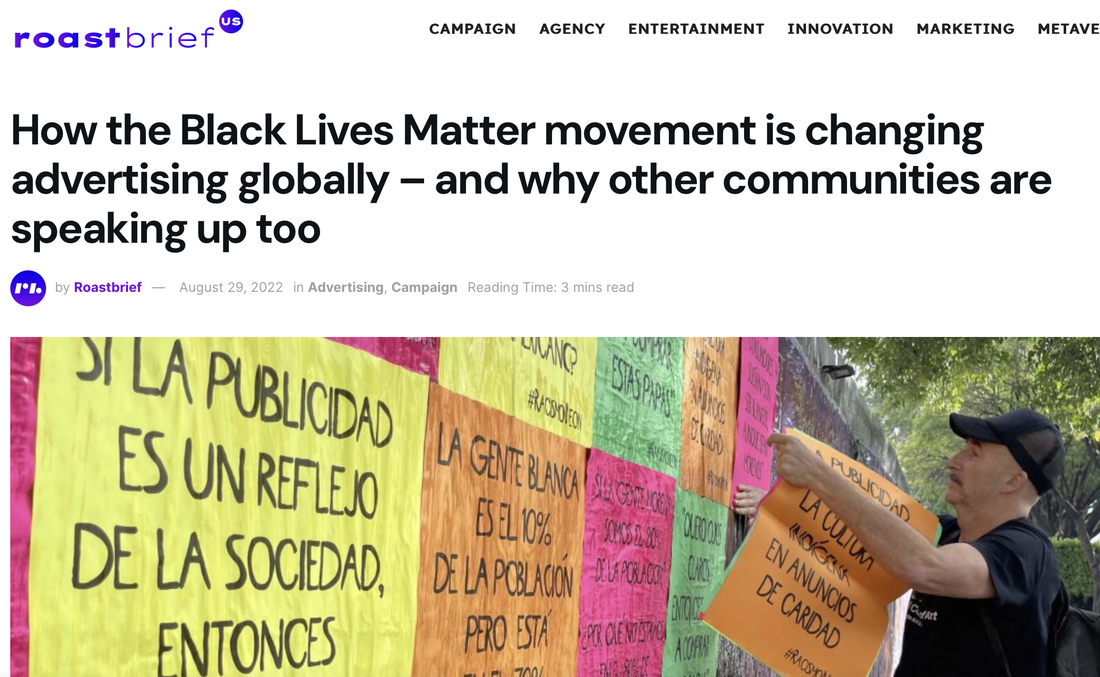
in various neighbourhoods around Mexico City over 4,000 posters have appeared challenging the advertising community to produce less racist messaging. With headlines such as ‘Whites are 10% of the population but are in 70% of the ads.’ |
|
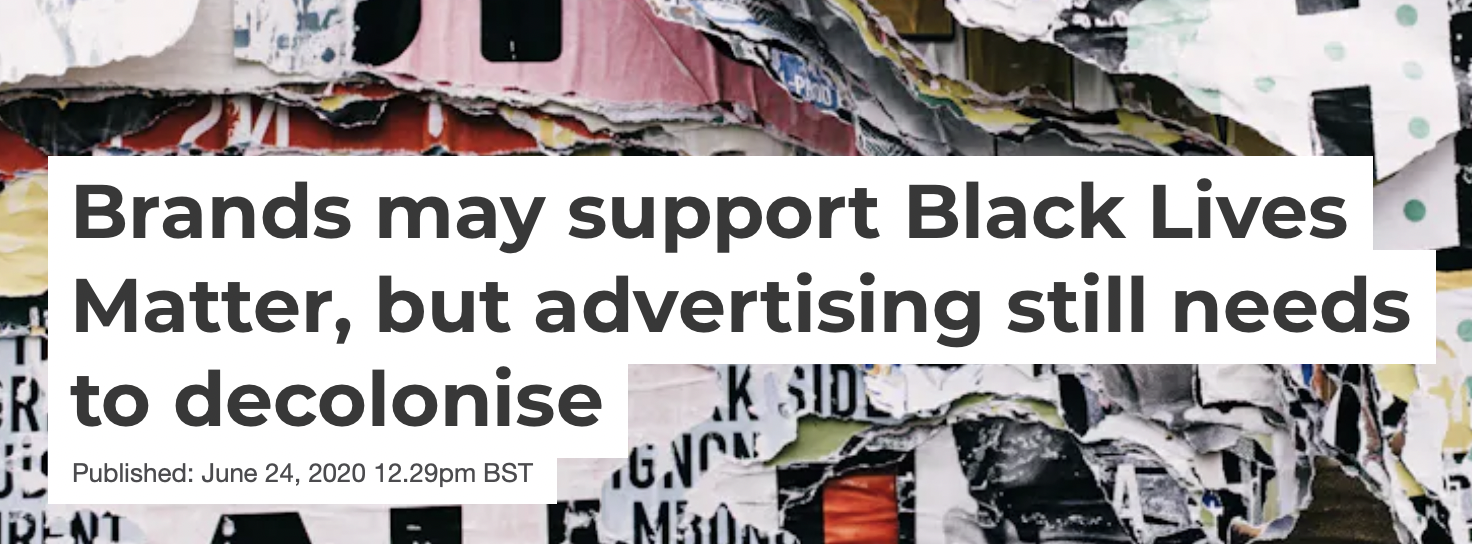
Brands may support Black Lives Matter, but advertising still needs to decolonise
theconversation.com/brands-may-support-black-lives-matter-but-advertising-still-needs-to-decolonise-133394
Brands such as Nike and Adidas to PG Tips and Space NK have been expressing solidarity with the Black Lives Matter movement by issuing statements and adverts of support – from Nike playing with their memorable tagline of “Just Do It” by asking consumers “for once, Don’t Do It” to the #Solidariteahashtag taken up by many tea brands. Many of these messages have been accompanied by promises to take a hard look at each company’s history and current working practises to see what changes can be made to address structural racism. |

|
ADVERTISING TOOLS AND TECHNIQUES APPROPRIATED TO CONSTRUCT THE GLOBAL BRAND MR. CLEAN westminsterresearch.westminster.ac.uk/download/1e7286f350aeae5af99f1fbe29269e696ceda03511587e2e037d2594ade5f9f8/519897/ADVERTISING%20TOOLS%20AND%20TECHNIQUES%20APPROPRIATED%20TO%20CONSTRUCT%20THE%20GLOBAL%20BRAND%20MR.%20CLEAN.pdf
As a knowledge worker for over twenty-five years in the advertising system, I created branded communications on behalf of corporations. Using my marketing experience coupled with research into techniques and methods appropriated by the advertising industry I will demonstrate how the creators of brand messaging use advertising tools & techniques to express branded concepts. |
|
VIDEO COURSE ON SEMIOTICS
massolit.io/courses/semiotics
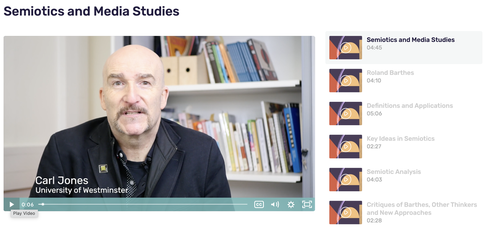
Semiotics In this lecture, Carl Jones (University of Westminster) will discuss semiotics. In the first module, we look at how semiotics is connected to media studies. After this, we will look at the semiotics thinker Roland Barthes. Then, we will look at some definitions and applications in the field of semiotics. In the fourth module, we look at some of the key ideas in semiotics. Then, we look at how we carry out semiotic analysis in media studies. Finally, we look at critiques of Barthes, other semiotics thinkers, and some new approaches. |
|
How the Black Lives Matter movement is changing advertising globally — and why other communities are speaking up too
roastbrief.us/how-the-black-lives-matter-movement-is-changing-advertising-globally-and-why-other-communities-are-speaking-up-too/
medium.com/@CarlWJones/how-the-black-lives-matter-movement-is-changing-advertising-globally-and-why-other-communities-c31d514065e6 Typically, advertising contains two messages, one from the brand and one that reflects cultural thinking. Examples include adverts selling cleaning products that show stereotypes of women as housewives, or tech adverts that depict white men as head of companies. These messages re-enforce how society thinks. Across the world, brands such as Nike and PayPal have been expressing solidarity with the Black Lives Matter (BLM) movement by issuing statements and adverts of support—from Nike adapting their memorable tagline of “Just Do It” by asking consumers “for once, Don’t Do It”, to the $500 million donation from PayPal. In the post-Black Lives Matter movement period, adverts in the UK and US appear to represent a more diverse representation of race, undoubtedly also thanks to the positive impact of the BLM movement. But has the Black Lives Matter movement made an impact in causing other races to be less discriminated elsewhere? |
|
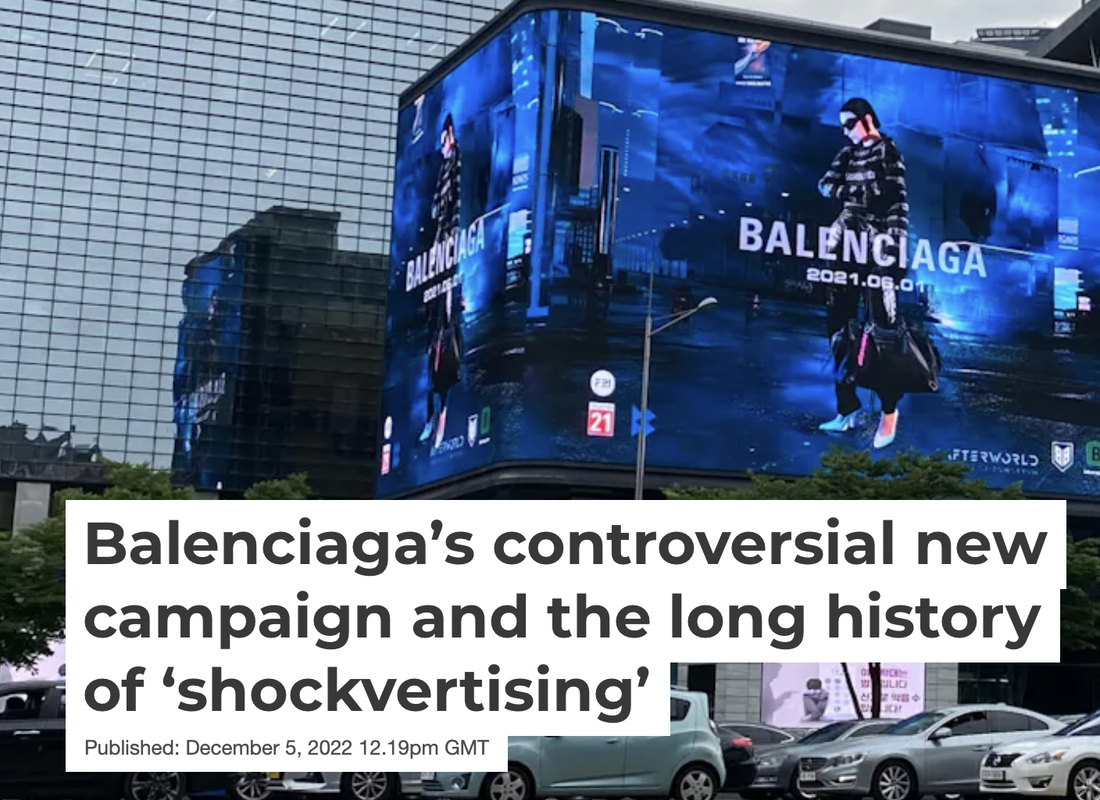
Balenciaga’s controversial new campaign and the long history of ‘shockvertising
medium.com/@CarlWJones/balenciagas-controversial-new-campaign-and-the-long-history-of-shockvertising-446026d5a145
theconversation.com/balenciagas-controversial-new-campaign-and-the-long-history-of-shockvertising-195778 Kim Kardashian is refining her personal brand. Right-wing news outlet Fox TV is gaining viewers through attention-grabbing headlines. Photographer Gabriele Galimberti is gaining notoriety. All this is due to a recent advertising campaign from leading global fashion brand Balenciaga that has caused widespread controversy. One photograph shows a child in a string vest holding a bondage gear-clad teddy bear. Another shows a handbag resting on paperwork about child abuse. Balenciaga responded to the backlash to its campaign by issuing an apology that blamed the set designers and photographers for the uncomfortable messages. It has also filed a US$25 million lawsuit against the campaign’s producers. |

|
SI LA PUBLICIDAD REFLEJA LA SOCIEDAD, ENTONCES LA PUBLICIDAD ES RACISTA
medium.com/@CarlWJones/si-la-publicidad-refleja-la-sociedad-entonces-la-publicidad-es-racista-632008653d3aSI
www.latinspots.com/sp/noticia/carl-jones-si-la-publicidad-refleja-la-sociedad-entonces-la-publicidad-es-racista/62974SI (01/08/22). Carl Jones, quien cuenta con una larga y premiada trayectoria en la industria de la publicidad Mexicana, tiene una profunda adoración por México, su historia y su cultura. El publicista ex VP-ECD de BBDO México, y Y&R México, Grey Canadá, y ex presidente del Circulo Creativo México actualmente completando su doctorado en el Royal College of Art (RCA) en Londres, Reino Unido sobre la descolonización de la publicidad, buscando justificar la forma de eliminar el pensamiento colonialista reflejado en los mensajes publicitarios en México, ha sido testigo de cómo el racismo y el clasismo se manifiestan en los anuncios. En su investigación publicada examina cómo ésta publicidad aspiracional demuestra y expone las desigualdades raciales y sociales en México y refuerza el pensamiento colonialista. |

|
Ads send out more than the clients’ message.
medium.com/hacker-maker-teacher-thief/ads-send-out-more-than-the-clients-message-d92d368c69e1
Version esp aqui: medium.com/@CarlWJones/los-anuncios-comunican-más-que-el-mensaje-del-cliente-8d56b7543ebe As creatives we are trained to take a problem and solve it using advertising tools and techniques. Messages are designed to sell a product or service, and we do not necessarily consider the consequences that a branded message has on society. We focus on an ad’s creation, its cumulative effect, and rarely pay attention to how advertising reflects what is considered ‘normal’ within society.As creatives we are trained to take a problem and solve it using advertising tools and techniques. Messages are designed to sell a product or service, and we do not necessarily consider the consequences that a branded message has on society. We focus on an ad’s creation, its cumulative effect, and rarely pay attention to how advertising reflects what is considered ‘normal’ within society. |
|
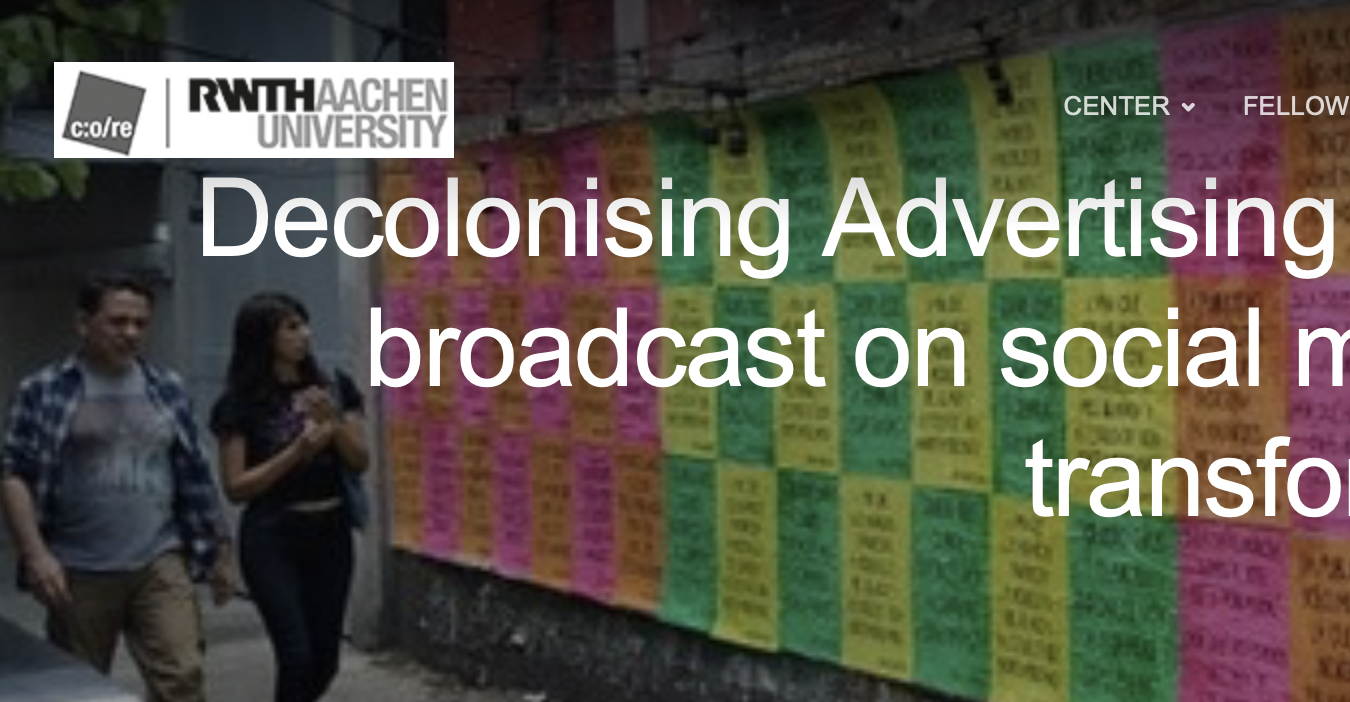
Decolonising Advertising through content creation, broadcast on social media, to inspire social transformation.
medium.com/@CarlWJones/decolonising-advertising-through-content-creation-broadcast-on-social-media-to-inspire-social-a429d4ded064
khk.rwth-aachen.de/2022/12/02/5074/5074/ I argue that Advertising in Mexico is a means employed by the ruling class in order to colonize Mexican society. It re-enforces a colonial thinking that started to be imposed five centuries ago by invaders of what is currently called the nation state of Mexico. My argument is based on a theoretical framework that maps the history of key concepts such as Post-colonisation and Decolonization. Anzaldua and Drussel’s definition of colonization from a Latin American point of view, and Mignolo’s observations on decolonization through ‘delinking knowledge’ are applied to advertising to reveal how this field can possibly be decolonized. |
